
Here’s All You Need to Know About Why Our HBCUs Are So Beloved
For the last few years, enrollment at historically Black colleges and universities (HBCUs) has risen, as more and more Black students are returning to their roots. HBCUs are important pillars of the Black community, providing safe spaces for Black scholars when they were denied entry in other rooms. But while students are still seeking the HBCU experience, there are growing fears that younger Black students don’t have these beloved institutions on their minds – pressing the community to have a serious talk about it.
We previously told you that around 60 percent of a surveyed group of high school students hadn’t been exposed to Black colleges before, which points to a gap between HBCUs and the Black youth. If you’re looking at colleges and are still on the fence, here’s all the proof you need that Black colleges are amazing academic spaces for Black students. Plus, the swag and confidence oozing from HBCU students is something everyone should be dying to be a part of!
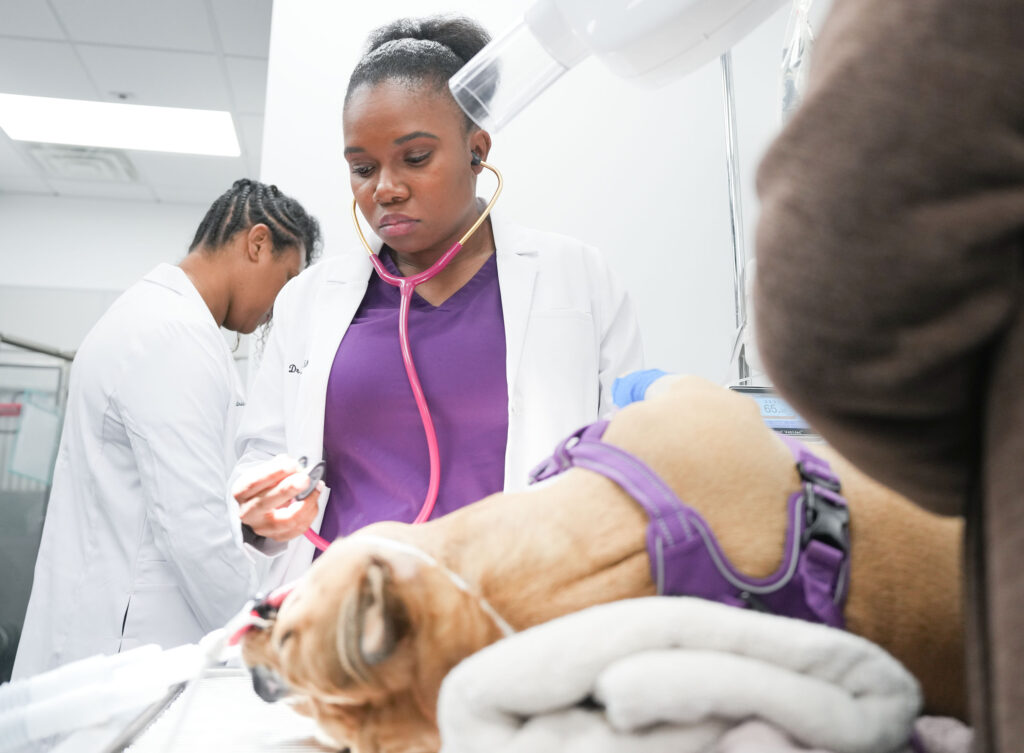
The Nation’s Only HBCU with a Vet Program

While many HBCUs like FAMU and Delaware State University offer pre-veterinary tracks, Tuskegee University is the only HBCU that has an accredited Doctor of Veterinary Medicine (DVM) program. The University of Maryland Eastern Shore is set to launch its own DVM program in June 2026, according to the University.
HBCU Students Are Happier

Black colleges are known for giving Black students a stronger sense of belonging compared to predominantly white institutions (PWIs) – a fact that can lead to a much more positive college experience. HBCU students are flourishing mentally at higher rates than their non-HBCU peers, according to a separate study conducted by UNCF.
Single-Gender HBCUs

There are only two HBCUs specific to women. Spelman College in Atlanta is undoubtedly the most notable, but Bennett College in Greensboro, N.C., has been serving Black scholars in the state since 1873. Bennett was originally co-ed, but became all-female in 1926, according to the website.
HBCUs Produce CEOs

In the U.S, 12.5 percent of CEOs graduated from an HBCU, according to the Thurgood Marshall College Fund. Statistics also reveal HBCUs contribute to 40 percent of Black engineers and over 80 percent of all Black doctors and dentists.
Which State Has the Most HBCUs?

The vast majority of HBCUs are located in the South, with Alabama having the most – Alabama A&M University, Alabama State University, Tuskegee University, Talladega College, Stillman College and several others. North Carolina is next in line with 10 HBCUs, including North Carolina A&T University, Fayetteville State University and North Carolina Central University.
States like Texas, South Carolina, Mississippi and Tennessee also have multiple Black colleges, but there are still quite a few HBCUs located in the North. The furthest northern Black college is Cheyney University in Pennsylvania, the nation’s oldest HBCU.
The University of the Virgin Islands, located in the Caribbean, is the only HBCU not located on the U.S. mainland.
Pro Athletes Go to HBCUs Too

Most HBCUs compete in NCAA Division I (D1) sports, especially when it comes to basketball and football. Bigger PWIs like Auburn University and the University of Southern California are known for breeding professional athletes, but many legends also went to Black schools.
Former NFL star Jerry Rice attended Mississippi Valley State University. Sports commentator and NFL alum Shannon Sharpe went to Savannah State University. NBA icon Charles Oakley played at a D2 school, Virginia Union University. Yolanda Laney, who’s credited with helping put women’s HBCU basketball on the map, graduated from Cheyney University.
An HBCU with Research 1 Status

Colleges that have reached Research-1 (R1) status are at the forefront of innovative medical research. They receive federal grants and private funding to advance their academic research. In 2025, Howard University was granted R1 status after the university lost it in 2005, citing that the Carnegie Classification requirements had changed, according to The Chronicle of Higher Education.
HBCU Awareness Month

While HBCU students and alumni are always proud to rep their schools, there is an entire month dedicated to making sure others know all about them. September is designated as HBCU awareness month.
A Billion-Dollar Endowment

If you’re unaware, an endowment is the rainy day fund schools have to help sustain college life. The federal budget contributes to endowments nationwide. That’s already on top of donations from sponsors, outside organizations and alumni.
Howard University in Washington, D.C., has the largest endowment of any HBCU. According to Pensions & Investments, Howard’s endowment reached $1.03 billion last year.
Black Men’s Enrollment Is Declining

Since 1976, female enrollment at HBCUs has outranked male enrollment. Only 28,000 Black men were enrolled at an HBCU in 2023, according to the National Center for Education Statistics.
Morehouse College Sets a Record

Morehouse College in Atlanta is the largest men’s college in the country. The school is also the nation’s only Black private liberal arts college for men, according to the website.
Non-Black Students at HBCUs

Non-Black students made up nearly 24 percent of total HBCU enrollment, according to the National Center for Education Statistics. At institutions like West Virginia State University and Bluefield State University, non-Black students outnumber Black ones six times over.
Impact on the Education Workforce

While it’s true that too many Black students aren’t exposed to historically Black schools, HBCU graduates are in the classroom. Half of Black public school teachers in the U.S. attended an HBCU, according to PBS.

